
Paying Attention
Why I started my blog and thoughts on Mary Oliver.

A funny thing about me: I don’t feel like I exist in the physical world most of the time. My body is there, obviously, but my thoughts are not. It’s not uncommon for me not to notice a drastic change in my apartment until day four or five (or until one of my roommates mentions it to me).
This isn’t usually a big deal. I (almost) get hit by cars. I (almost) run into people on the street. I (almost) fall off the trail while hiking, etc. It never actually happens, except when I (actually) put the milk in the cupboard at least once a month.
Incidentally, my favorite poet for the last several years has been Mary Oliver, who, funnily enough, writes almost solely about her connection with the physical world. Here’s an excerpt I’ve been loving recently from her poem “What is There Beyond Knowing.”:
"How wonderful it is to follow a thought quietly to its logical end. I have done this a few times. But mostly I just stand in the dark field, in the middle of the world, breathing."
I wonder sometimes if I love her poetry because she experiences life so differently from me, in such a sensory way. Many of her poems have immense depth to them—she won the Pulitzer Prize for her collection American Primitive, which I read recently—but most of the time it’s the simplicity of her writing that astounds me.
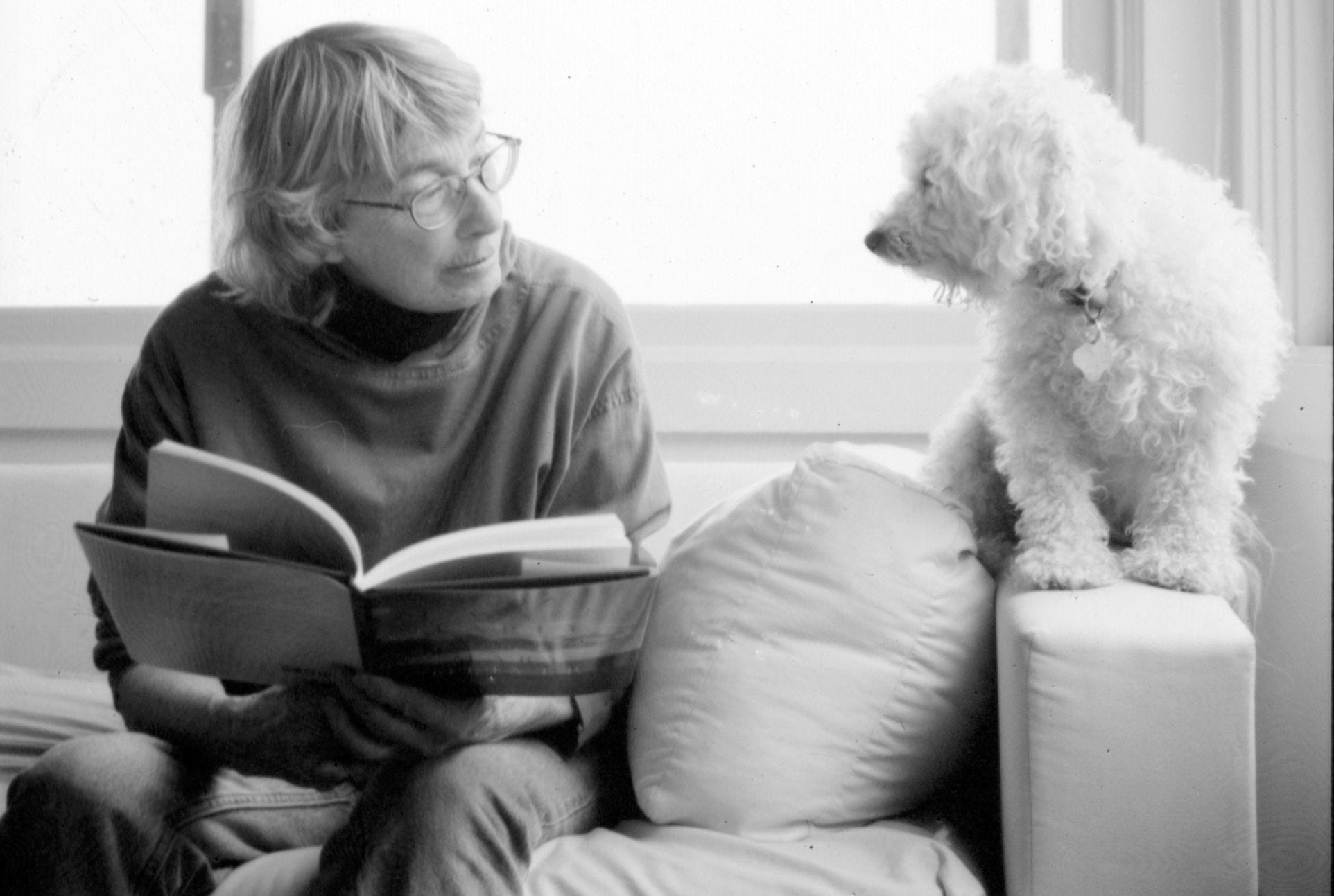
I’m pretty sure I cried the first time I read this one. It’s called “The Sun.”:
"...and have you ever felt for anything such wild love– do you think there is anywhere, in any language, a word billowing enough for the pleasure that fills you, as the sun reaches out, as it warms you as you stand there, empty-handed– or have you too turned from this world– or have you too gone crazy for power, for things?"
“As you stand there, empty-handed.” What a line. I can choose to scrutinize her poems if I want to, but I get the sense that she didn’t intend for all of her poems to be read that way. In some interviews, she refers to herself as a “praise poet,” and in her essay collection, Upstream, she says that “attention is the beginning of devotion.”
It seems that the message she wants to convey with her poetry is that the world speaks for itself; it doesn’t need to be diminished by interpretation.
“The years to come—this is a promise— will grant you ample time to try the difficult steps in the empire of thought where you seek for the shining proofs you think you must have But nothing you ever understand will be sweeter, or more binding, than this deepest affinity between your eyes and the world.”
I sometimes wrestle with the idea that thinking more will enable me to be more intentional about how I live my life. This feels true, and I think it is true most of the time. Sometimes, though, I feel that I am at my most spiritual when I am thinking less and appreciating more, or just thinking slower, or thinking of different things.
Reading Mary Oliver compels me to shift my focus outward; my thoughts are suspended and I am able to exist in a moment separate from the past or the future or anything other than what I am feeling and seeing. Her choice to focus on the external instead of the abrasive interiority that a lot of poets lean into is refreshing.
"I don't know exactly what a prayer is. I do know how to pay attention, how to fall down into the grass, how to kneel down in the grass, how to be idle and blessed, how to stroll through the fields, which is what I have been doing all day. Tell me, what else should I have done?"
In Exodus 3:5, Jehovah tells Moses, “Put off thy shoes from off thy feet, for the place whereon thou standest is holy ground.” In ancient cultures, removing your shoes was a sign of humility, but I also like to think that when Moses took off his shoes, he was choosing to eliminate artificial barriers between himself and God. It was a way to force him to recognize and appreciate where he was and what he was experiencing through his physical body.
I’m trying to observe more, and I am also working on recognizing that life is meant to be appreciated. I love the inclination to do, but I think it is equally valuable to be. Just as Mary Oliver said, I am empty-handed. There’s not much I can give to other people, and to the world, except my attention and appreciation.
This last excerpt is from my favorite one:
"Let me keep my distance, always, from those who think they have the answers. Let me keep company always with those who say “Look!” and laugh in astonishment, and bow their heads."
I don’t understand a lot of things, and I don’t pretend to. There are some things that I don’t believe I am capable of understanding right now. There are some things that I don’t think I should understand yet. But I can praise, and I can appreciate. I can allow the world to speak for itself, without drawing conclusions.
I have tried to observe more this week. Writing helps with that, which is why I wanted to start a blog. I generally don’t know what I think until I write about what I think, which makes it a helpful way to process what is going on around me and quiet a lot of the noise that prevents me from paying attention.
And time slides by so quickly. I don’t want to miss anything, good or bad. So cheers to Mary Oliver, and to writing, and to living on earth, etc. :)
Side note:
I have a vivid memory from five or six years ago of skateboarding down a parking garage with my friends listening to this song. I probably still listen to it once every couple of weeks when I feel like I need to slow down.
And a new find from this week when Tiger was trying to get me to go to this concert with him and Alexa:
I adore Mary Oliver! one of her poems I've taken to heart that fits with this piece is:
instructions for living a life:
pay attention
be astonished
tell about it